
The Church’s Thursday Clock
La piel del tamborThis flow traces the weekly service that legally protects the parish and becomes the immediate deadline driving coercion, abduction, and Quart’s intervention.
increasing Bearing strength in each event
 decreasing
Bearing strength in each eventdecreasingA Privilege from the Past
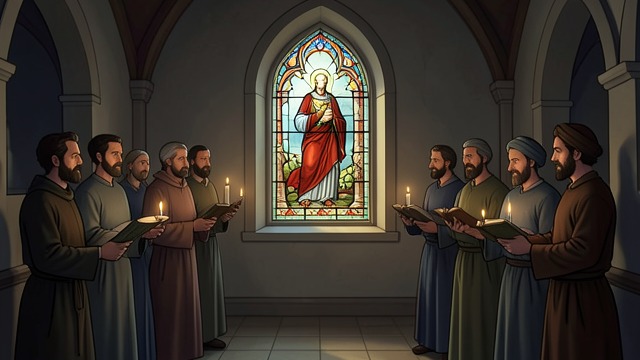
A Privilege from the Past
A family condition
The church’s founding arrangement links its privileges to Masses for Gaspar Bruner. Later legal changes complicate ownership but do not erase the condition.
History becomes leverage
The old agreement gives a small parish a legal defense against powerful interests. Its survival depends on a ritual that must be repeated rather than merely remembered.
A Service Every Thursday
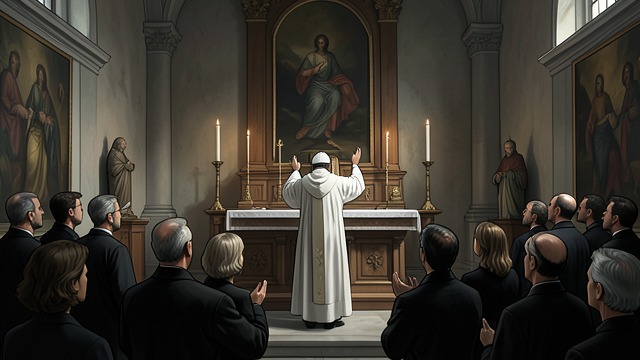
A Service Every Thursday
Ferro’s regular practice
Ferro says Mass each day, including the Thursday service required by the Bruner privilege. His consistency prevents the parish’s legal protection from lapsing.
A watchful audience
An emissary of the archbishop and a notary connected to Gavira monitor the service for any lapse. The routine is transformed into a public test of discipline and endurance.
The Deadline Approaches

The Deadline Approaches
A narrow opportunity
Gavira needs the church cleared before the next Thursday Mass. The service stands between his redevelopment plan and the legal steps required to proceed.
Coercion becomes tempting
Peregil is ordered to ensure that no Mass can occur. His crew first considers damaging the building, then shifts toward removing Ferro from the parish.
The Priest Removed
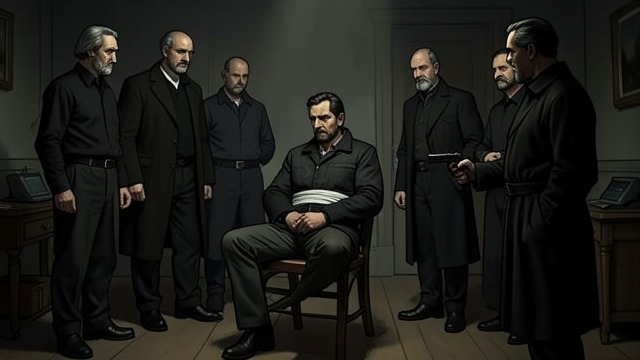
The Priest Removed
An abduction
Don Ibrahim’s crew kidnaps Ferro and holds him aboard the Canela Fina. The plan is designed to prevent the priest from reaching the church by morning.
A safeguard at risk
The abduction turns the legal condition into an immediate human crisis. Whether the service can happen now depends on events beyond the archbishop’s control.
Mass Despite Arrest
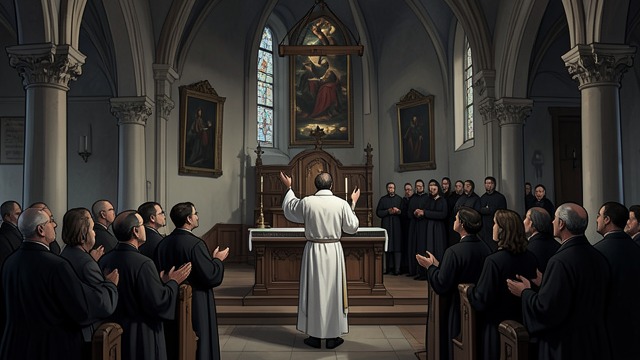
Mass Despite Arrest
A substitute celebrant
After Ferro is taken to police custody, Quart returns to the church and celebrates the morning service. His action preserves continuity at the moment the parish’s regular priest is unavailable.
The condition outlives the priest
The event makes clear that the church’s survival does not rest only on Ferro. Others can sustain the ritual, though their doing so carries personal and institutional costs.
1687, when the church’s founding arrangement is established
at eight o’clock each Thursday before the crisis
the week in which Quart arrives
after midnight before the scheduled Thursday service
eight o’clock on the morning after Ferro’s confession
